

Introduction
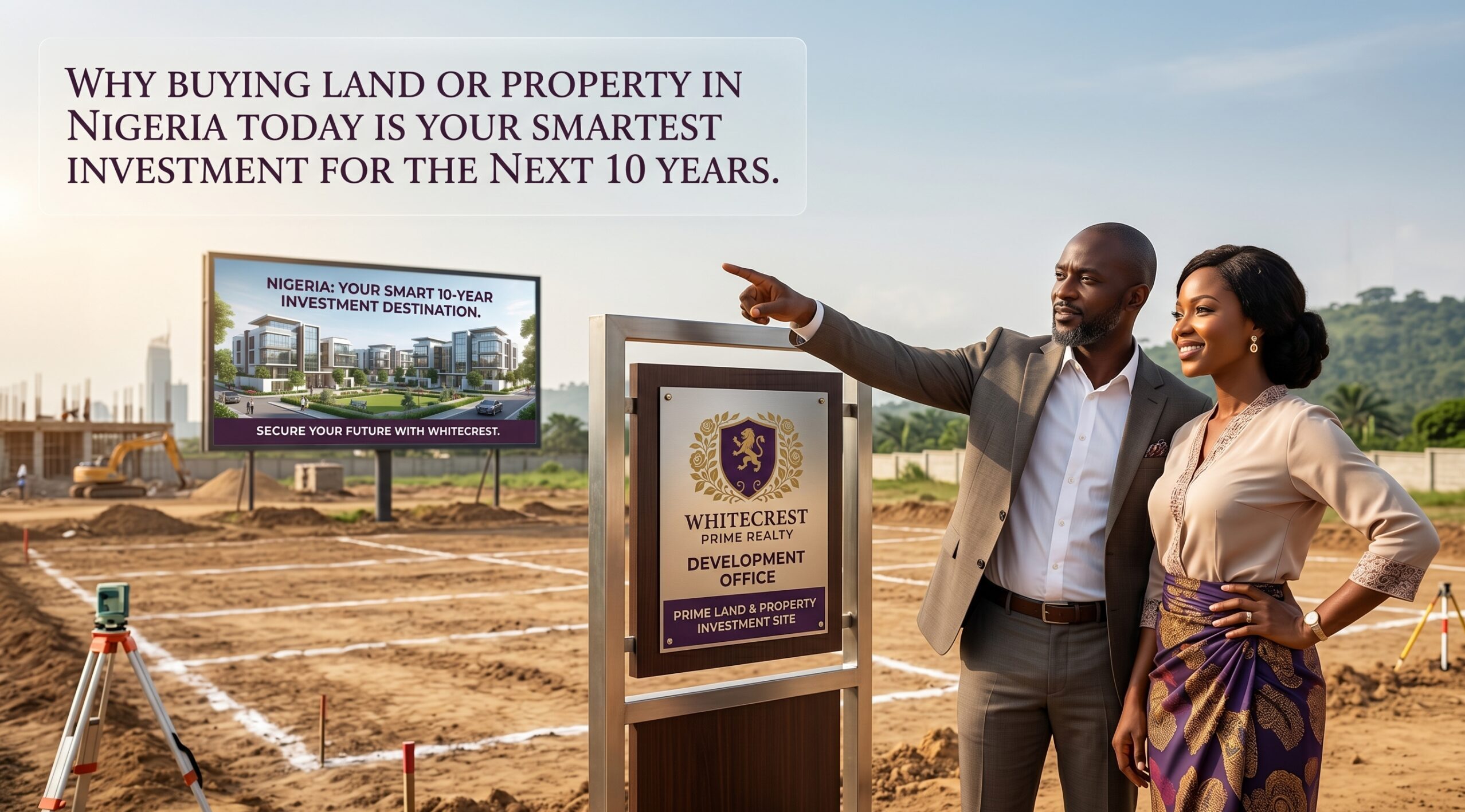
If you have been sitting on the fence about buying land or property in Nigeria, this article is your wake-up call.
Every year, thousands of Nigerians delay property purchases — waiting for the “right time,” the “right price,” or the “right location.” But if history has taught us anything about the Nigerian real estate market, it is this: the people who bought land in Lekki in 2005 are millionaires today. The people who purchased property in Gwarinpa, Abuja in 2008 have watched their investments triple. And the people buying smartly in emerging areas today will be telling the same story in 2034.
This article breaks down exactly why investing in Nigerian real estate right now — whether land, apartments, or residential homes — is one of the most powerful financial decisions you can make for the next decade.
The Nigerian Real Estate Market: A Quick Overview
Nigeria’s real estate sector is one of the most resilient segments of its economy. Despite inflation, currency fluctuations, and economic uncertainty, property values in major Nigerian cities have consistently appreciated over the long term.
According to industry data, real estate contributes approximately 6–7% of Nigeria’s GDP annually, and demand continues to outpace supply — particularly in urban centres like Lagos, Abuja, and Port Harcourt.
The reason is simple: Nigeria’s population is growing fast. With over 220 million people and a rapidly expanding middle class, the demand for housing, commercial spaces, and land is not slowing down anytime soon. In fact, experts estimate that Nigeria has a housing deficit of over 28 million units — a gap that creates enormous opportunity for property investors at every level.
5 Powerful Reasons to Buy Property in Nigeria Today
1. Land and Property Values in Nigeria Only Go Up Long-Term
This is perhaps the most important truth about Nigerian real estate. Despite short-term economic fluctuations, the long-term trajectory of property values in Nigeria has always been upward.
Consider these real examples:
- A plot of land in Lekki Phase 1, Lagos that sold for ₦500,000 in 2003 is now valued at over ₦150 million.
- Serviced apartments in Maitama, Abuja that cost ₦8 million to build in 2007 now rent for over ₦6 million annually.
- Land in Ibeju-Lekki, Lagos that was sold for ₦200,000 per plot in 2015 is now selling for between ₦3 million and ₦8 million per plot — driven by the Dangote Refinery and Lekki Deep Sea Port developments.
The pattern is consistent. Infrastructure development, population growth, and urbanisation continue to push property values upward across Nigeria’s major cities and emerging corridors.
2. Real Estate Protects Your Wealth Against Inflation and Naira Devaluation
One of the biggest financial threats facing Nigerians today is inflation and the continued devaluation of the naira. Money sitting in a savings account loses purchasing power every year. But property does the opposite — it appreciates.
When the naira weakens, property values in Nigeria often adjust upward in naira terms because construction costs, land value, and rental income all rise with inflation. This makes real estate one of the most effective hedges against the economic challenges that Nigerians face.
If you have ₦5 million sitting in a bank account today, it will buy you less in 5 years. But ₦5 million invested in land in a growing area of Lagos or Abuja today could be worth ₦15–25 million by 2034.
3. Rental Income Creates a Passive Income Stream That Grows Every Year
Buying property in Nigeria does not just build long-term wealth — it can put money in your pocket every month through rental income.
Rental yields in Nigeria’s major cities remain among the strongest in Africa:
- A 2-bedroom apartment in Lekki, Lagos rents for between ₦1.5 million and ₦4 million annually.
- Shortlet apartments in Abuja and Lagos generate between ₦25,000 and ₦150,000 per night depending on the location and finish.
- Commercial spaces and office properties in high-demand areas can deliver rental yields of 8–12% per year.
As Nigeria’s housing deficit grows and urbanization accelerates, rental demand will only increase — meaning your rental income will grow year after year.
4. Emerging Locations Today Are Tomorrow’s Prime Areas
One of the greatest wealth-building strategies in Nigerian real estate is identifying tomorrow’s prime locations today and buying before prices skyrocket.
Right now, several areas across Nigeria are at that early stage, where land is still affordable but infrastructure development is underway and prices are poised for significant appreciation:
- Ibeju-Lekki and Epe, Lagos — driven by the Dangote Refinery, Lekki Deep Sea Port, and the proposed fourth mainland bridge
- Lugbe and Kuje, Abuja — fast-growing suburbs attracting middle-income families priced out of the city centre
- Asaba, Delta State — one of the fastest-growing cities in southern Nigeria with increasing commercial and residential demand
- Uyo, Akwa Ibom — rapidly developing with strong diaspora investment driving property demand
Buying in these areas today at current prices gives you the same advantage that early Lekki investors had 15–20 years ago.
5. Property Is a Tangible, Generational Asset You Can Pass Down
Unlike stocks, cryptocurrency, or savings, real estate is a physical asset that you can see, touch, develop, and pass down to your children and grandchildren.
In Nigerian culture, land and property have always represented wealth, security, and legacy. Owning property in Nigeria is not just a financial decision — it is a generational one. The land or home you buy today becomes part of the foundation you build for your family’s future.
Common Mistakes Nigerian Property Buyers Make (And How to Avoid Them)
Understanding why to invest is only half the equation. The other half is investing wisely. Here are the most common mistakes Nigerian property buyers make — and how Whitecrest Prime Realty helps you avoid every single one:
Buying Without Verifying Documents
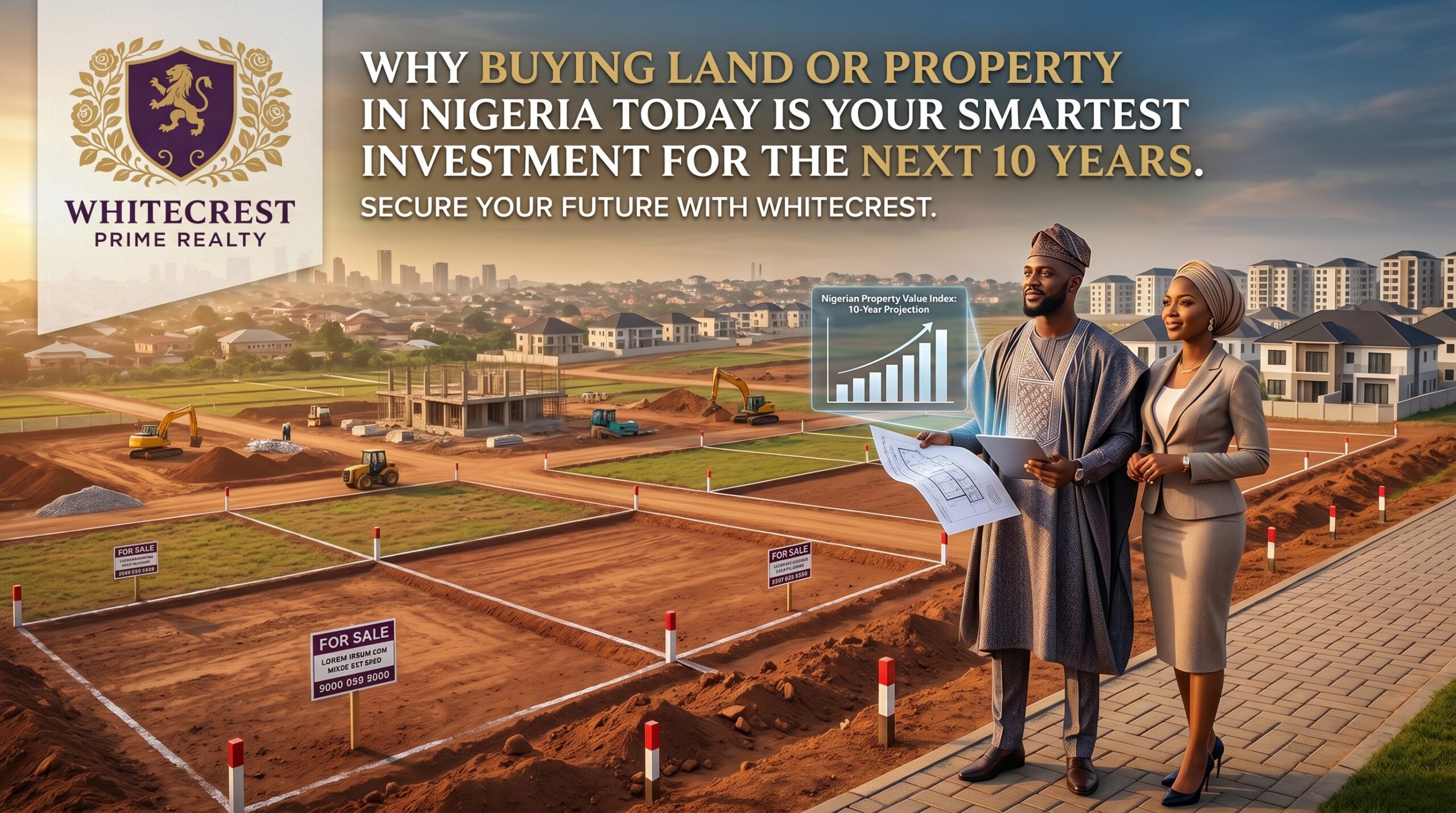
This is the number one cause of property loss in Nigeria. Fraudulent sellers, forged titles, and land under government acquisition have cost Nigerians billions of naira. Always conduct thorough due diligence — confirm the Certificate of Occupancy (C of O), Governor’s Consent, Survey Plan, and Deed of Assignment before paying any money.
Buying in the Wrong Location
Not all land appreciates at the same rate. Location is everything in real estate. Research infrastructure development plans, proximity to key amenities, and the track record of price growth in any area before committing.
Working Without a Trusted Real Estate Company
In Nigeria’s largely unregulated property market, working with a professional, verified real estate company is not optional — it is essential. A trusted company like Whitecrest Prime Realty handles verification, legal documentation, negotiation, and closing so you are fully protected at every stage.
Waiting for the “Perfect” Time to Buy
There is no perfect time. The best time to buy Nigerian real estate has always been as early as you can afford to. Every year you wait is a year of appreciation you miss and a year of rental income you leave on the table.
What the Next 10 Years Look Like for Nigerian Real Estate
The next decade will be defined by several powerful forces that will drive property values even higher across Nigeria:
Population growth: Nigeria is projected to become the third most populous country in the world by 2050. More people means more demand for housing, land, and commercial space.
Infrastructure development: Major projects including the Lagos–Ibadan Expressway, the Abuja–Kaduna Rail, the Lekki Deep Sea Port, and various state-level road and housing projects are opening up new corridors for property development and appreciation.
Diaspora investment: Nigerians in the diaspora continue to pour billions of dollars into the Nigerian property market annually, driving up demand particularly in premium and mid-market segments.
Urban migration: Young Nigerians are moving to cities at an accelerating rate, creating sustained demand for rental properties, shortlet apartments, and affordable homes.
All of these forces point in one direction, UP for Nigerian property values over the next 10 years.
How Whitecrest Prime Realty Can Help You Start Today
At Whitecrest Prime Realty, we are not just a real estate company — we are your long-term property investment partner. Whether you are buying your first plot of land, acquiring a rental apartment, or building a multi-property investment portfolio, we guide you every step of the way.
Our services include:
- Property Sales & Acquisitions across Lagos, Abuja, Port Harcourt, and beyond
- Investment Advisory to help you identify high-yield opportunities in emerging and established markets
- Property Verification & Due Diligence to protect your money and give you complete peace of mind
- Land Listings in the most promising growth corridors in Nigeria
- Shortlet & Rental Property Management for investors seeking passive income
The best time to plant a tree was 20 years ago. The second best time is today. The same is true for Nigerian real estate.
Final Thoughts
The Nigerian property market has rewarded patient, well-informed investors for decades — and the next 10 years will be no different. With population growth, infrastructure investment, and rising urbanisation all working in your favour, buying land or property in Nigeria today is not just a smart decision. It is arguably the smartest financial decision you can make for your future.
Do not wait until prices are beyond your reach. Do not wait until someone else buys the land you were considering. Take action today.
Ready to start your property investment journey in Nigeria? Contact Whitecrest Prime Realty today — and let us help you find, verify, and secure the right property for your goals.
Whitecrest Prime Realty — Buy · Rent · Shortlet · Land. Across Nigeria.
📍 Lagos | Abuja | Port Harcourt | And beyond 🌐 www.whitecrestprimerealty.com 📲 DM us on Instagram: @whitecrestprimerealty